Showing posts with label News. Show all posts

Monday, March 14, 2011

iPad 2 launch predictably draws crowds, sellouts

The scene at the San Francisco Apple Store.
The scene yesterday evening at the downtown San Francisco Apple store.
(Credit: James Martin/CNET)

If there were any lingering doubts that Apple's iPad sequel would draw the same interest the first-generation device did, they were quashed before stores even opened their doors yesterday.
The iPad 2, a device that was unveiled just 10 days ago, launched to huge crowds and inventory that sold out quickly, both in stores and online.
Shipping times for online orders, which opened yesterday morning at 1 a.m. PT--some 16 hours before the first Apple retail stores began selling the iPad 2--were quickly pushed from days into weeks. This left the best chance for customers who wanted to pick up a device before April being to head to one of Apple's stores, or its partner retailers such as Best Buy, Target, Wal-Mart, and carrier stores for Verizon and AT&T.
Analysts like Piper Jaffray's Gene Munster are already setting estimates for first day sales somewhere between 400,000 to 500,000 units, some 200,000 better than the first iPad did during the same time period in its launch. Apple is expected to unveil preliminary unit sales on Monday, as it did on the Monday following the launch of the first iPad.
Big numbers
Until those numbers come in, there are some signs this launch is off to a bigger start than that of the first-generation device. At Apple's flagship store in San Francisco for instance, which CNET was monitoring along with stores in Manhattan, the line practically ran out of room, as it wrapped almost around the city block. That store sold out of its entire stock of Wi-Fi-only units just a few hours after iPad 2 sales began, leaving evening line-waiters with only the option of buying the more expensive models with 3G service from Verizon. Worth noting is that this is the same store that had the richest supply of iPads following last year's shortages.
It was the same story on the other side of the country, with the line outside New York's Fifth Avenue store growing to an estimated 800 people, with some having begun waiting in line on Wednesday night and braving torrential downpours. For one individual, that perseverance--as well as her spot at the front of the line--netted her $900 from someone else who didn't want to queue up.

At least 200 people line up outside the Apple store on the Upper West Side of Manhattan on Friday, waiting for the iPad 2 to be released.
At least 200 people line up outside the Apple store on the Upper West Side of Manhattan yesterday, waiting for the iPad 2 to be released.
(Credit: Sarah Tew/CNET)
As with previous Apple launches, the art of the line wait has become a business. The first two spots at the San Francisco store went to "runners" for TaskRabbit, a service that specializes in sourcing out errands and other odd jobs to its workforce of vetted contractors. James Alimeda and Josh Elavitti were paid $60 per iPad they were waiting in line for, with each buying two. In Alimeda's case, he was already there to purchase one for himself. Those two, along with two others in line, were part of a much larger operation at various retailers to help people procure devices without putting in line time.
Behind them was a group of around 35 non-English speaking line-waiters who managed to get an Apple store employee who could speak Cantonese to act as a translator, just a half-hour before iPad 2 sales began. According to a report on Bloomberg, their aim was to buy iPad 2s, all going to one single unidentified buyer, who planned to sell them on the gray market, likely at a premium and in places where the device was not yet available.
Speaking of which, the iPad 2 goes on sale in 26 additional countries just two weeks from now, arguably giving gray market buyers from those areas less of an incentive to deal with international travel. However, given some of the initial demand from this first day, there's the possibility that Apple could once again decide to push that launch back, as it did for the first-generation device.
The device
Of course, why people were lining up in the first place is always on the minds of passers-by. One woman who walked past the line asked if there was someone famous playing a show there that evening. Others were seeing the device for the first time in an iPad 2 demo video Apple played in its retail store display.
The iPad 2, which CNET has given a four-star rating in its review, is a refinement of the the first-generation device. It's thinner, it's got a faster processor and better graphics chops, and it's the same price. It's also got new features like dual video cameras and compatibility with new accessories like a neat cover that attaches to it with magnets and an AV cable that can mirror whatever you're doing onscreen to anything with an HDMI plug.
For many buyers though, this second-generation device is something they were waiting for before pulling the trigger on the original iPad. That's what many buyers CNET talked to mentioned as being one of the big attractors. They know Apple's cyclical product release schedule by now and were counting on a refresh of a few key things, even if they didn't necessarily need them.
There are things Apple could have added, but didn't. Though with lines like this on opening day, it seems the revamp offers enough.
End of the line
As is the question every time Apple sells a product with this much fanfare, why is there this big rush to get it on opening day? And why can't Apple seem to meet demand when this happens again and again? With the first iPad, this was easier to answer. It was a new product, in what had so far been a niche category. Apple seemingly didn't anticipate the demand, and thus was forced to play catch-up as it went on to make its way to a million units sold in under a month's time.
This time around, however, Apple's got more retail stores, and a handful of retail partners on board to get what is likely to be more units out the door in a shorter amount of time. The original iPad has also proved to be an overwhelming success, with Apple selling more than 15 million of the devices.
Even so, Apple had very subtly reconfigured its launch plans with this one to encourage people to buy the device in person, doing new things like keeping online purchases from starting until the day it went on sale, while throwing in the usual mix of temptations for buyers to come to its own stores, with food and drink for the wait in line and personalized setup (the free service that has retail employees getting new iPads up and running before buyers leave the store--an important step considering the iPad, like the iPod Touch, first needs to be activated with iTunes before buyers can begin using it.
The simplest answer to the mad rush, though, continues to be Apple's terrific marketing--one of the many things that separates Apple and its products from its competitors. For many who go through the wait, it's not just about the device, it's the experience that happens before they even break out their credit card, something that's hard to put a price tag on.
READ MORE - iPad 2 launch predictably draws crowds, sellouts

Friday, December 4, 2009

Google Wave Features


A wave can be both a discussion and a document where people can discuss and work together using richly formatted text, photos, videos, maps. Wave builds on the concept of cloud computing.
Google wave is going to become a wave of the future. It is a next generation web-based communication and collaboration tool.
Google wave can merges service e-mail, instant messaging, wikis, and social networking together at one single platform.
Common terms which are used in Wave are Wavelet, Blip, Document, Extension, Gadgets, Robots
Key features of Wave:
• Real-Time information
• Live transmission of any type
• Used as faster conversation
• Wave is used as new way of creating dialogue among group of users
• Google Wave contains gadgets and tools
• In Google wave there are gadgets like Wikify which can brings Wikipedia to your Google Wave account.
• It include tools for checking spelling and grammar
• It has a great futures like translating between 40 different languages by using Rosy Extension.
• It has TWaves extension that allows the user to incorporate their tweet stream.
• It has drag and drop sharing of digital assets like photos, sound and video.
• Playback facility
• Open Source
• Easy embedding facility
• eBayBot - Search eBay in Google Wave
• Google Wave has a Public Timeline, like Twitter ( “with:public” )
• Webcam Video Chat and Much More on Google Wave with 6rounds
• Adding new people to the conversation easy
• Used as customer support tool for marketers
• Bloggy extension can Embeds the Wave into a blog
• Polly the Pollster : Creates any poll you can imagine
Google Wave is going to become project management tool for the future.
No doubt Google wave is going to become a future marketing tool. Marketers will have the ability to create customer support in real time.
It is also becoming developer heaven for developing gadgets and extensions and Google has announced that there will be an official Wave app store.
According to experts research Google Wave is a best to organize role playing games in the coming future.
Wave is going to become a real-time marketing strategy for the marketers.
READ MORE - Google Wave Features

Google Wave First Look


If you're not one of the 100,000 lucky users who gets an invitation to Google Wave today, don't fret. You can check out Google Wave right here.
But first, ground rules. Click on all images in this post to see them full size. Uppercase "Wave" refers to the entire Google Wave product. Lowercase "wave" refers to an individual message or document. Think of a lowercase wave like an email or a Google Doc that you're collaborating on with other people. The screenshots in this post are from the Wave developer preview, not wave.google.com, invites to which are going out today. We'll update this post with anything significantly new in the non-preview version when we get our grubby little paws on the proper server invitation.
Here is a simple video i took from YouTube to present Google Wave's nice features
Ready? Let's go.

READ MORE - Google Wave First Look

Wednesday, December 2, 2009

Google Wave Ready For Wider Test


Google Wave is ready for its next step: a more thorough test of its scalability and stability as more than 100,000 new users crowd onto the service.

As promised, Google plans to open Google Wave beyond an extremely limited preview on Wednesday, granting access to users who have signed up in hopes of getting a chance to try the service. Google received more than 1 million requests to participate in the preview, said Lars Rasmussen, engineering manager for Google Wave, and while it won't be able to accommodate all those requests on Wednesday it is at least ready to begin the next phase of the project.

Google Wave is an attempt to re-engineer Internet communication, blending elements of e-mail, instant messaging, social networking, and workplace collaboration software into a single Web application. It was first unveiled at Google I/O in May before Web developers who were a bit dazzled by the possible uses of the technology.

At present, however, Google Wave is one big bug bash, perhaps half a year away from launching as a stable product. Google engineers have solved many of the more persistent bugs that were hampering the product a few months ago, but there is still a long way to go and Wave should not be considered anything but a "preview," Rasmussen said. Still, that's better than "developer preview," the status previously attached to Wave that implied only hardcore techies should venture within.

In addition to the developers and waiting list, Google also plans to open Wave up to a limited number of Google Apps enterprise customers for testing, Rasmussen said. A few companies, such as SAP and Salesforce.com, have already started playing around with the technology but Google is seeking feedback from other organizations on how Wave might work within their environment.
READ MORE - Google Wave Ready For Wider Test

Google to let publishers limit free website access


WASHINGTON (AFP) -Google, under fire from Rupert Murdoch and some other newspaper owners, said it will let publishers set a limit on the number of articles people can read for free through its search engine.

Google's announcement came as the News Corp. chairman, who has threatened to block the Internet giant from indexing his newspapers, and other US media heavyweights gathered here to discuss journalism in the Internet age.

Murdoch, speaking at the two-day meeting hosted by the Federal Trade Commission (FTC), said newspapers "need to do a better job of persuading consumers that high quality reliable news and information does not come free."

"Good journalism is an expensive commodity," said the 78-year-old Murdoch, who repeated his intention to begin charging readers of News Corp. newspapers on the Web.

Arianna Huffington, co-founder and editor-in-chief of The Huffington Post, accused Murdoch and other newspaper publishers meanwhile of being in "digital denial" and said they needed to "stop whining."

Murdoch has blasted Google and other news aggregators for "stealing" stories without sharing advertising revenue and has reportedly been holding talks with Microsoft about making News Corp.'s content accessible exclusively through the software giant's new search engine, Bing.

Acknowledging that "creating high-quality content is not easy and, in many cases, expensive" Google said in a blog post it was changing its "First Click Free" program.

First Click Free directs readers from Google or Google News to a story on a newspaper's website but prevents them from having unrestricted access.

Google noted, however, that some readers were "abusing" the program by returning to Google or Google News and clicking through to other stories.

"Previously, each click from a user would be treated as free," Google senior business product manager Josh Cohen said. "Now, we've updated the program so that publishers can limit users to no more than five pages per day without registering or subscribing."

Without naming any companies, Murdoch hit out at news aggregators saying they are "feeding off the hard-earned efforts and investments of others." "To be impolite it's theft," he said.

The News Corp. chief also said "the old business model based on advertising only is dead."

"In the future, good journalism will depend on the ability of a news organization to attract readers by providing news and information they're willing to pay for," Murdoch said. "In the new business model we will be charging consumers for the news we provide on our Internet sites."

Noting that the Wall Street Journal is already charging online, he said: "We intend to expand this pay model to all our newspapers in the News Corp. stable: the Times of London, The Australian, the rest."

"Some critics say people won't pay," Murdoch said. "I believe they will."

He also warned against seeking government help for the newspaper industry, which is battling declining print advertising revenue, falling circulation and free news on the Web.

"The prospect of the US government becoming directly involved in commercial journalism ought to be chilling to anyone who cares about free speech," Murdoch said.

Huffington rejected Murdoch's criticism of news aggregators saying they actually drive traffic to newspaper websites.

"In most industries, if your customers were leaving in droves, you would try to figure out what to do to get them back," she said. "Not in the media. They'd rather accuse aggregators of stealing their content.

"It's time for traditional media companies to stop whining," she said.

Also addressing the FTC event was Steven Brill, a co-founder of Journalism Online, a company which is seeking to help news organizations make money on the Web.

Brill said market research suggests that some news sites may be able to get 10 percent or more of their readers to pay online for content of "distinctive value."

READ MORE - Google to let publishers limit free website access

Sunday, July 26, 2009

Google Latitude now available for iPhone—via the web


Google has finally released a version of its Latitude geo-location service for the iPhone. However, Apple forced encouraged Google to abandon its native iPhone app, citing possible confusion with the default Maps app. Even though Google was able to develop a nice looking web-app alternative, the result leaves much to be desired.

The basic gist of Latitude is similar in some respects to BrightKite—fire up the app and it sends your GPS coordinates to Google. It also lets you view a map showing the coordinates of all your friends, wherever they might be located. If you're trying to meet up with friends on a Friday night, for instance, it makes finding them much easier. Like BrightKite, users can control who can see the location information and just how accurate it is—helpful for avoiding awkward confrontations with that stalker-y blind date from last week.

Google makes native clients for Android, Blackberry, Symbian and Windows Mobile platforms, but Apple apparently wasn't having any of that on the iPhone. "We worked closely with Apple to bring Latitude to the iPhone in a way Apple thought would be best for iPhone users," wrote Mat Balez, Product Manager with the Google Mobile Team. "After we developed a Latitude application for the iPhone, Apple requested we release Latitude as a web application in order to avoid confusion with Maps on the iPhone, which uses Google to serve maps tiles."

Luckily, Mobile Safari supports the W3C Geolocation API, and ties it in with iPhone OS's Core Location, so it makes a web-based Latitude possible. One annoying side effect, though, is that you have to keep approving Safari to use Core Location whenever you load a website using the Geolocation API. And, despite the iPhone-optimized delivery, I found the Latitude web app performance to be less than stellar. Unlike other mobile platforms, Apple also doesn't offer a way for third-party apps—and this extends to web apps—to run in the background, which prevents Latitude from updating your GPS coordinates if you fire up another app. It will continue to broadcast your location, on the other hand, as long as it is the currently active tab in Mobile Safari.

With so many limitations, though, Latitude doesn't quite achieve the set-it-and-forget-it ease that makes most such apps handy. You can use it to check and see if any friends are nearby, but if those friends are using an iPhone, you're only liable to see the location where they last remembered to load Latitude. Overall, the concept is interesting, and has the potential to be useful and fun. Ultimately, the iPhone version simply doesn't quite deliver the full Latitude experience.

READ MORE - Google Latitude now available for iPhone—via the web

Thursday, July 23, 2009

New ‘Google’ phone an impressive upgrade


Saying “T-Mobile G1” isn’t too bad, but “T-Mobile myTouch 3G with Google” is a mouthful. Once you get past the name, the phone itself is an impressive follow-up to the first Android phone that was released last fall. The “myTouch 3G” is due out Aug. 5, and after initial testing of the phone, I find it’s a winning alternative to the iPhone, BlackBerry and the Palm Pre for those aren’t enamored with those choices.

The phone betters its older sibling in looks — sleeker and lighter — and performance with better battery life. Those improvements are mainly because the myTouch is a touchscreen-only phone; the G1 is touchscreen but also includes a slide-out QWERTY keyboard, which adds weight and drains energy, T-Mobile says. The myTouch weighs 4.1 ounces and has a rated talk-time battery life of up to six hours; the G1 is a heftier 5.6 ounces with a rated battery life of up to five hours, although it often didn’t last that long.

Battery life is a big issue with smartphones, with Wi-Fi and GPS radio use, Web surfing and downloads and e-mail all draining the power. T-Mobile says the battery in the myTouch is physically larger than the G1’s and also has better radio performance and power management, in large part because it doesn’t have a physical keyboard.

After eight hours of running the myTouch, including a few hours on standby, the battery meter said it was at 52 percent; and after 12 hours, it was at 29 percent. That said, I was running the phone through different paces, sometimes using Wi-Fi, which drains the battery more quickly, because I could not get 3G, or faster wireless, network service in my area.

The phone’s 3.2-inch display is the same size as the G1’s and both phones, made by HTC, use the same Qualcomm 528-MHz processor. The myTouch is 4.45 inches high, 2.19 inches wide and .58 of an inch thick, compared to its predecessor, which is 4.6 inches high, 2.1 inches wide and .62 of an inch thick. It feels good in hand, just the right size, and is narrower than the iPhone, which is 2.4 inches wide.

The myTouch comes with 512 megabytes of internal memory, double the internal memory of the G1, and a pre-installed 4GB removable microSD card.

Less bulk is definitely welcome. But the sleeker profile comes with some tradeoffs. The seven buttons, including a trackball, on the front of the device feel a little crowded and too close together for comfort, unlike the buttons on the G1.

The myTouch's on-screen menus also can be a little dicey, especially when dealing with e-mail. It's a little too easy to hit the wrong key. On-screen buttons for "reply," "reply all" and "delete" are positioned at the bottom of the screen close to the hardware buttons.

The "delete" button in particular is near the physical "back" button, and several times I thought I hit that button, but found I had inadvertently hit "delete," and away went my e-mail.

The touchscreen itself is very responsive, and as with the G1, users touch, tap, swipe and scroll, and have use of on-screen menus, as well as a trackball to navigate. The accelerometer, the motion sensor that switches the screen from portrait to landscape mode, is also quite nimble.

READ MORE - New ‘Google’ phone an impressive upgrade

BlackBerry Desktop coming to the Mac


At long last, Research In Motion is bringing its BlackBerry Desktop software to Mac OS X.

In a blog post on Monday, RIM announced that a version of its smartphones' desktop software will be released this September for Apple computers.

According to the smartphone maker, users will be able to sync their iTunes playlists, calendars, contacts, notes, and tasks from their Mac. They will also have the option of adding applications, updating the BlackBerry when new software is made available, and managing multiple handsets on their Apple computers.

Although users will be excited to know BlackBerry software is finally coming to their Mac, some of those users might not be satisfied. RIM said only Mac OS X versions 10.5.5 and up will be supported, meaning that Mac users who haven't updated Leopard or those running Mac OS X 10.4 Tiger likely won't be able to run the software.

Unlike iPhone software, which can be installed in both Windows PCs and Macs, RIM's BlackBerry software has been available only for Windows; a third-party tool has been required to enable communication between Macs and BlackBerrys.

If you want to be notified when the software is available when it's released in September, you'll need to sign up on RIM's Mac page.


READ MORE - BlackBerry Desktop coming to the Mac

Wednesday, July 22, 2009

Synaptics ClearPad 3000 Touchscreen


Synaptics has shown of their latest touchscreen technology, the Synaptics ClearPad 3000 Touchscreen. The Synaptics ClearPad 3000 Touchscreen can register up to 10 fingers simultaneously, it is designed to be used in high end mobile phones like the iPhone, as well as hand held gaming consoles.

The Synaptics ClearPad 3000 Touchscreen has 48 sensing channels which means it can pick up 10 fingers at once, and apparently the technology will scale up to 8 inch screens.

It certainly looks very impressive from the video, hopefully we will see it in mobile phones next year and who know we many even see it in the next generation iPhone.

READ MORE - Synaptics ClearPad 3000 Touchscreen

E-Readers: The End of Bookstores?


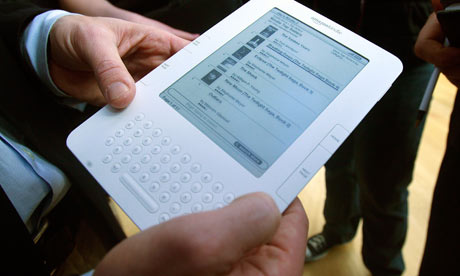
I don't buy books anymore. That is I don't buy hard copies of books anymore. I've been an eReader user for more than three years. It started with the Sony eReader and then moved to the Kindle (both I and II). At first, my transition to digital book consumption was gradual. I'd often be reading (and buying) hard copy books at the same time I was getting used to the experience of the digital platforms.

Six months ago, I cut the cord for good. I love my Kindle. As many who have embraced digital eReaders have reported, I quickly found myself reading more than I ever have in my life. Other than the pain of having to shut down during takeoff and landing periods in flight (at some point that has to be solved), I have not looked back.

One of the curious byproducts of my new book consumption behavior is that I actually am spending more time than I ever have before in bookstores. Wait a minute, you might say, if you are reading and buying digital books, why would you be doing that?

Reading is a momentum-based activity. The more you do it, the more your want to do it. I am constantly seeking my next read. While there are many great places online to read about new books, there is nothing that can capture or replicate the exploring wonders of a good book store. That is, if you don't know what you are searching for, the digital medium can fall short in comparison to the retail experience.

A good bookstore brings an incredible wealth of inventory to bear. The ability to "sample" in person is far better than in digital format. Great bookstores are also strong gathering points for discussion and guidance from experts and actual authors.

Here's the problem. The culmination of my bookstore experience is the process of taking my Kindle out and downloading the book(s) I've discovered through the wonders of the retail experience. That's financial ruin for the bookstore.

I wonder how common that experience is. If it's as frequent as I believe, Amazon is getting one of the great free rides on the back of Border's, Barnes & Noble, and all of the wonderful independent bookshops that help people find the right books. Think about it, the bookstore helps the consumer decide which book he wants, but the transaction goes to Amazon.


Perhaps the bookstore needs to embrace the inevitable reality that its model as it exists now is not sustainable. For one thing, bookstores could devise an on-site customer digital download path where the store can extract a negotiated fee for all sales it drives to Amazon. I certainly would do what I could to help the store get credit (and payment) for the service they provided me.

One thing's for sure: I don't ever want to go back to reading and buying hard copy books. I also don't want to give up the benefit of the bookstore retail experience in helping me find what to read next. It's all yet another example of the rapid disruption brought on by the digital revolution. However, it's also an opportunity to rethink and evolve long-standing models into those that can thrive into the future.

READ MORE - E-Readers: The End of Bookstores?

Sunday, July 19, 2009

Firefox improves, but still loses its edge

The war of the Web browsers has taken another turn with the release of a major new version of Mozilla Firefox, the No. 2 browser in market share, but No. 1 in the hearts of many of the most knowledgeable computer users.

This new edition of Firefox is the third big new browser release this year, following new editions of Microsoft's Internet Explorer and Apple's Safari. Unlike Firefox, these two browsers come bundled with the two major computer platforms, Windows and Mac. By contrast, Mozilla must convince users to download Firefox, which comes in essentially identical versions for both systems. And it has done a reasonably good job, garnering by most estimates around 23 percent market share, versus between 60 percent and 70 percent for IE, which is by far the leader. Meanwhile, Google — a former Firefox supporter — has joined the battle with its nascent Chrome browser, which so far runs only on Windows, but is due on the Mac one day and is to morph into a whole new operating system next year. And there are other very capable browsers with small user bases, the most notable of which is Opera.

I've been using Firefox since its inception years ago, and have been testing this latest iteration, version 3.5, since it emerged June 30. I can continue to recommend it as a fine way to surf the Web. The new version is improved, and worked very well for me on both my Windows and Macintosh computers.

But, in this round of the war, Mozilla's product no longer stands out as clearly superior, for two reasons. First, Firefox has lost its traditionally biggest advantage: greater speed than its rivals. While Firefox 3.5 is about twice as fast as the previous version 3.0, and handily beat Internet Explorer 8 in my tests, it lagged behind both Safari 4.02 and the beta edition of Chrome 2.0 a bit in most test scenarios. Overall, Safari was fastest in most of my tests, both on Mac and Windows (yes, Apple makes a little-known version of Safari for Windows).

In fact, Mozilla no longer is claiming to be the fastest browser. It now prefers to say it is one of what it calls the "modern" browsers, along with Safari and Chrome, whose under-the-hood technologies make them better at handling a growing breed of sophisticated Internet-based applications that mimic traditional computer programs like photo editors and word processors and spreadsheets.

Second, this version of Firefox has relatively few new features, and some of them are merely catch-ups to those introduced earlier by Microsoft and Apple. Most notable among these is a private browsing mode, first popularized in Safari, and greatly expanded in IE, which allows you to traverse Web sites without leaving traces on your computer to show what you've been doing.

Mozilla says its main goal from now on will be to turn Firefox into the ideal platform for running Web-based applications. It shares the belief, also fervently embraced by Google, that consumers will gradually migrate away from programs stored on their computers' hard disks to those stored in "the Cloud," the industry's term for the servers that run the Internet.

To show this, the new Firefox can do a few new tricks, like streaming video directly from Web pages without requiring plug-ins like Adobe's Flash. Alas, this works only with obscure video formats little used on the Web at the moment.

Firefox 3.5 does include some new features, in addition to private browsing.

It can pinpoint your location, so that any properly configured Web site can serve up locally relevant content. It has a nice option that lets you "forget" any Web page in your history, wiping out all traces you've been there, even if you neglected

to turn on private browsing mode beforehand. And it can recover your open tabs after a crash.

Also, Firefox continues to lead its rivals in the number and variety of third-party add-ons that enhance browsing in myriad ways, such as adding features to sites like Twitter or making bookmarking easier.

As for speed, I tested Firefox 3.5 against its main rivals by timing how long it took to launch into the same home page, and how long it took to completely load popular Web sites like Facebook and YouTube. I tested how long it took to completely load folders containing numerous sports and news sites simultaneously. I also ran an industry benchmark test that measures the browsers' speed at handling an important Web language called JavaScript. I did these tests on the same home network on both a Dell and an Apple computer.

While Firefox won a few of these tests, Safari and Chrome won more of them. In most cases, the speed differences weren't large, except in the case of IE, which was dramatically slower than the others. But this is the first new version of Firefox I've tested that didn't win most of the tests.

Firefox is still a great Web browser, and still much faster than its main rival, Internet Explorer. But its edge is being eroded.

Walter Mossberg writes on personal technology for the Wall Street Journal. His column runs Sundays in the Times.

READ MORE - Firefox improves, but still loses its edge

Saturday, July 18, 2009

Microsoft Window 7: Is New OS The Beginning Of XP's End?

Windows 7's Oct. 22 release will be an exciting day in Redmond, but IT folks should mark it for another reason. It's the beginning of XP's end.

Don't get me wrong, I'm not a raving XP fan. But Vista's flop gave us a long run with a relatively stable platform that actually got better over time. You can buy a new machine today with a clean XP SP3 image and have the same look and feel you had when XP came out in 2001.

A lot of companies are doing just that, with 70% of corporate desktops still running XP, Forrester finds.

Full Vista rollouts are rare, and instead most tend to have what Roy Atkinson, director of end-user support at the Jackson Laboratory, calls "Vista leak-out." Less than 5% of Jackson's several thousand desktops run Vista; most are on XP. "We only deployed Vista if there was a driver or application that clearly worked better," he says.

It would be nice to have the tighter security, 64-bit OS, and higher performance networking of Vista. But delays, bugs, hardware requirements, and bad market perception have held it back.

There's no need to jump off XP yet, but it's going to get harder to stick with it, especially later next year. Mainstream support for XP ended April 14. This means Microsoft doesn't have to release any new features or make any design changes. Security fixes will be released as needed, but non-security hot fixes won't be released to the public.

Phone support is available if you're willing to pay and if you bought extended support from Microsoft (that deadline was July 14).

"So what? I don't call them anyway," a particularly anti-Microsoft IT director says. He should read the support terms closely, because there's more here than the end of free phone support. This is Microsoft's official way of saying it can leave XP alone if it wants, ending all feature updates and enhancements.

XP could start to get shortchanged on feature development as soon as Oct. 22, when Windows 7 and Windows Server 2008 R2 are released. The new Windows Server 2008 R2 features--including DirectAccess, which provides simplified remote access; BranchCache, an automated file-caching option for remote offices; and an updated offline folder synchronization capability--will only work with Windows 7 clients. No XP or Vista updates are planned.

If Microsoft adds any features for XP, it would have to add them for Vista, too, and Microsoft is moving as fast as it can away from Vista. Windows 7's October ship date is three months earlier than the company's targeted January 2010 release date. Businesses can get it Sept. 1. Microsoft early? I have the same stunned reaction as when my 6-year-old cleans his room, and I find myself asking, "What's he hiding?"

READ MORE - Microsoft Window 7: Is New OS The Beginning Of XP's End?

Craving Pizza? Just Download the App

In a move sure to thrill its laziest customers, Pizza Hut unveiled Friday its new iPhone application that allows users to order pizza without so much as dialing a number. Simply type in your order, then sit back and wait until it arrives.

For those bored with the traditional methods of ordering pizza, the app also has some unconventional tools. If you want extra sauce on your wings, for instance, you shake the phone like a bottle.

And, for those who find ordering pizza too sober a task, the app comes with a racing game named "Hut Racer."

Pizza Hut hopes the app will appeal to customers who rely on their iPhones, said Brian Niccol, Pizza Hut's chief marketing officer.

"As more of our customers are integrating the iPhone and iPod touch into their everyday lives, Pizza Hut wants to be right there with them," Niccol said in a statement. "As a longtime category leader in innovation, creating an App Store application is just one more way we are helping customers place orders in a way that best fits their mobile lifestyle."

And there are myriad other programs (apps for short) taking advantage of the growth of wireless handheld devices.

Here's a small sampling:

Hard of Hearing? Just Grab Your iPhone

People don't normally equate the iPhone with medical innovation, but with the June release of an application that doubles as a hearing aid, they may have to reconsider.

The application, which is called soundAMP, is made by Ginger Labs, a California-based software applications developer, and is available in the iTunes store for $9.99.

Though it's not an actual hearing aid, soundAMP achieves a similar effect. Users just launch the application and then plug in a pair of earphones. The application takes in sound from a microphone (be it built-in, in a headset or from elsewhere) and then amplifies and filters it.

Then you can adjust the volume to your liking with a slider on the touchscreen. You also can replay five or 30 seconds by tapping the appropriate button on the screen. Hearing aids often may be associated with the more mature, but soundAMP's developers insist their product is age neutral -- of equal value to the octogenarian hard of hearing and the college student stuck in the back of a large lecture class.

(As a caveat, if you really are losing your hearing, you should probably visit a doctor -- soundAMP may be novel, but medically certified it is not.)

READ MORE - Craving Pizza? Just Download the App

Apple And The Palm Pre: It Was Sync Or Swim

Apple's decision to ban the Palm Pre from accessing the iTunes store is a move by the iPod maker to ensure that it continues to siphon consumer dollars into its own pockets at every end of the spectrum.

Earlier this week an Apple spokesperson confirmed that Apple iTunes update 8.2.1 would make a concerted effort to ban non-iPod and non-iPhone hardware, including the Palm Pre, from syncing with the iTunes store.

The update appears to be a retaliation against Palm, which announced iTunes syncing abilities in May, before the hardware was launched.

It shouldn't be too surprising to anyone that Apple has made the move to cut the Palm Pre off at the pass. After all, Apple makes no bones about the fact that it is a business designed to make money. Mac and Apple devotees understand that they are paying a premium for the hardware they purchase because it is completely different from anything else on the market.

In many cases, Apple's hardware drives its software sales. But Apple's software also drives hardware sales. And Apple makes money at both ends. The iPod and iPhone maker makes a margin on every device it sells. Apple also gets a cut of sales through the iTunes store. The company even takes a percentage of each app sold through the App Store.

Living in Apple's ecosystem means playing by Apple's rules, and ultimately that means lining the pockets of Steve Jobs and cohorts. That's no surprise and, for many, that's perfectly acceptable.

Jon Rubinstein, chairman and CEO of Palm, was once an Apple executive and one of Jobs' advisers. In fact, Rubinstein was in charge of the iPod division at Apple before he left the company. It seems fair to say that Rubinstein is in a unique position to know exactly how the gears turn at Apple.

Yet Palm still made the decision to publicly announce that the Pre would sync with the iTunes store, essentially throwing down a gauntlet. Maybe Rubinstein thought his past relationship with Apple and Jobs would give him a pass. If that's the case, he obviously thought wrong.

Apple refreshes or tweaks its iPod lineup on almost a yearly basis to entice loyal customers into upgrading to the latest and greatest. While the refresh cycle may in part be due to new technology, it would be naive to think it wasn't also an attempt to line its own coffers.

And Rubinstein and Palm should have known better than to try and dip its hand into one of Apple's profitable cookie jars.
READ MORE - Apple And The Palm Pre: It Was Sync Or Swim

Firefox 3.5 Makes Browsing Better

Internet users are partying like it's the 90s, when the browser wars were roaring and Microsoft (NSDQ: MSFT) and Netscape were fighting to become the dominant window on the Web. These days, Microsoft Internet Explorer is in the lead -- just like then -- but we're also seeing an efflorescence of alternatives: Mozilla Firefox (which counts Netscape as an ancestor), Google Chrome, Apple Safari and Mobile Safari, and the venerable Opera. Into the fray comes a new version: Firefox 3.5. This build offers significant improvements, including upgraded Web technology, geolocation, privacy tools, and tab management. The browser also improves performance over previous versions.

Private Browsing

Firefox 3.5 implements private browsing, catching up with features already available in Internet Explorer, Safari, Chrome, and Opera. When you're in private browsing mode, the browser switches off logging your history, cookies, user names, and passwords.

Even in private browsing, your Web traffic isn't guaranteed private. If your network manager is tracking your browsing on the server, private browsing does nothing to block that. Also, the servers you visit may be keeping records of your visit, especially if you log on to access the server.

Firefox's implementation of private browsing has a different user interface than competing browsers. The chief difference: When you switch to private browsing, Firefox shuts down all your existing browser windows and tabs, leaving only the private browser window open. Other browsers leave existing windows and tabs open and open a new window for private browsing.

I like the way Firefox closes non-private windows when in private browsing; I'm less likely to accidentally enter private information in a non-private window. However, other people might find it time consuming to switch back to non-private browsing, especially if they have a lot of open tabs and windows that need to be reloaded. It's a matter of personal preference.

If you forget to switch to private browsing before you visit a site, Firefox 3.5 lets you erase your tracks -- just go to the history menu, open "show all history," find the page you want to hide, and click "forget about this site." That's handy for those of us who are paranoid and absent-minded ("My enemies are conspiring against me -- but I can't remember who.")

READ MORE - Firefox 3.5 Makes Browsing Better

Wednesday, July 15, 2009

Hacker accesses email of Twitter employees, and tells all

A person going by the name of Hacker Croll has distributed hundreds of private documents they obtained from hacking into the private email of Twitter employees.

Much of the material is being distributed by TechCrunch and other sources. The action, which includes the release of 310 documents ranging from executive meeting notes, partner agreements and financial projections, amount to a corporate pillage that shows how important security plays now in the Internet age. Our writer Dean Takahashi has continued to write about how easy it is to hack email, web sites, and other electronic information (in fact Dean even built his own hacker software), but many people shirk taking extra security measures. To some extent, it’s human nature: Implementing security measures takes time and resources, and you’re never quite sure what the payoff will be.

But the attack is more significant for Twitter, because of the implications it could have for the millions of Twitter users. Increasingly, they’re using Twitter to send personal messages (using “direct message”), which are not intended for public consumption. Indeed, Twitter has been expanding to essentially become an email-like dashboard for some users — you can use it as a proxi instant messaging service. Your dirty secrets being revealed on the Internet by some ruthless hacker could become your biggest nightmare.

The latest incident may have started back in May, when there were reports that Twitter was hacked by someone who got into the accounts of several Twitter employees and then accessed the Twitter accounts of celebrities such as Britney Spears and Ashton Kutcher. The hacker posted screen shots of the accounts on a French message board, and they’ve surfaced more recently here (with translation here).

However, in a response to a inquiry by TechCrunch yesterday, Twitter co-founder Ev Williams suggests that the latest hack may have been unrelated to the May attack, saying it didn’t include getting access to Twitter accounts — but his response wasn’t entirely clear on that.

Here’s what he did concede: The email of an administrative employee was compromised, as was Williams’ wife’s Gmail account, which is where Williams says the Hacker got access to some of his credit cards and other information. The hacker also got into “a couple” other employees personal accounts (including Amazon, AT&T, Paypal and more):

In general, most of the sensitive information was personal rather than company-related. Obviously, this was highly distressing to myself, my wife, and other Twitter employees who were attacked. It was a good lesson for us that we are being targeted because we work for Twitter. We have taken extra steps to increase our security, but we know we can never be entirely comfortable with what we share via email.

The released documents also included stuff from meal preferences, calendars and phone logs of various Twitter employees, to more strategic projections such as plans for Twitter’s reality TV show, the Final Tweet. TechCrunch said it would not release a bunch of other documents that would be highly distressing, such as emails with details about prospective employees who had interviewed for jobs at Twitter but had remained at their existing jobs.

READ MORE - Hacker accesses email of Twitter employees, and tells all

Monday, July 13, 2009

EA gets into the cheap, fast game market on iPhone

EA's approach to iPhone gaming has been to recreate its most successful properties as high quality, high price games. The games created have been pretty great so far, but success on the iPhone often goes to cheaper, high-concept titles, and EA has decided to get in on that action as well: the publishing giant has created a small studio called 8lb Gorilla to create easy to learn, inexpensive games for the iPhone.

The first title coming from the studio? Zombies & Me, a title where you herd zombies under incoming missiles to blow them up, saving your grandma's house. The game can be understood and played in a matter of seconds, but the intense nature of play may give the game longer legs than even higher-priced titles. Or at least that's the hope.

The problem with iPhone games is that many people are starting to figure out that buying on launch is a bad, bad idea. Many games go on sale in a matter of days. By starting at under a dollar for the games, they become an impulse purchase instead of something gamers have to think about, and there's very few places for the price to go.

The game is coming very soon, and we should expect a title from 8lb Gorilla every month or so. A small studio making cheap, quick games and releasing them on a regular scale, adding the level of polish we expect from mobile EA titles? This could be big.

READ MORE - EA gets into the cheap, fast game market on iPhone

Windows 7 to Feature XP Mode for Older Applications

Microsoft will include a feature that lets people run applications in a Windows XP mode on Windows 7 to ensure that applications not designed for the forthcoming OS can run on it, a company executive said Monday.

During a keynote at the Microsoft Worldwide Partner Conference in New Orleans, Bill Veghte, senior vice president of Windows,demonstrated a mode called "Seamless XP" that allows someone to run an application designed for a previous version of Windows on Windows 7 as if it's running on XP. He showed how the feature works using an older third-party application originally designed for Windows 2000, QuickBooks Enterprise Solution 5.0.

The feature seems similar to Apple's Classic mode, introduced on Mac OS X, that allowed people to run legacy Mac applications on OS X, which was a drastic change to the platform.

Veghte did not give many specifics on the feature, but said that virtualization technology in Windows 7 enables it.

Like Mac OS X, Vista was a major architectural shift from previous versions of Windows, and Microsoft ran into a massive application-incompatibility problem with the OS. This led many people -- particularly business users dependent on legacy Windows applications -- to stay on XP or downgrade to XP after buying a Vista machine.

Microsoft wants to avoid that problem with Windows 7 when it's released later this year, Veghte said, acknowledging that architectural changes to Vista "came at a cost in terms of compatibility."

"We are making sure Windows Vista to Windows 7 is a smooth migration," he said.

Microsoft seems to have learned its lessons from the disappointment that Vista was in the marketplace. The company has been diligent during the development process of Windows 7 to let partners, including original equipment manufacturers, business partners and independent software vendors, test and provide feedback on a feature-complete version of the OS much sooner than with previous versions of Windows.

READ MORE - Windows 7 to Feature XP Mode for Older Applications